
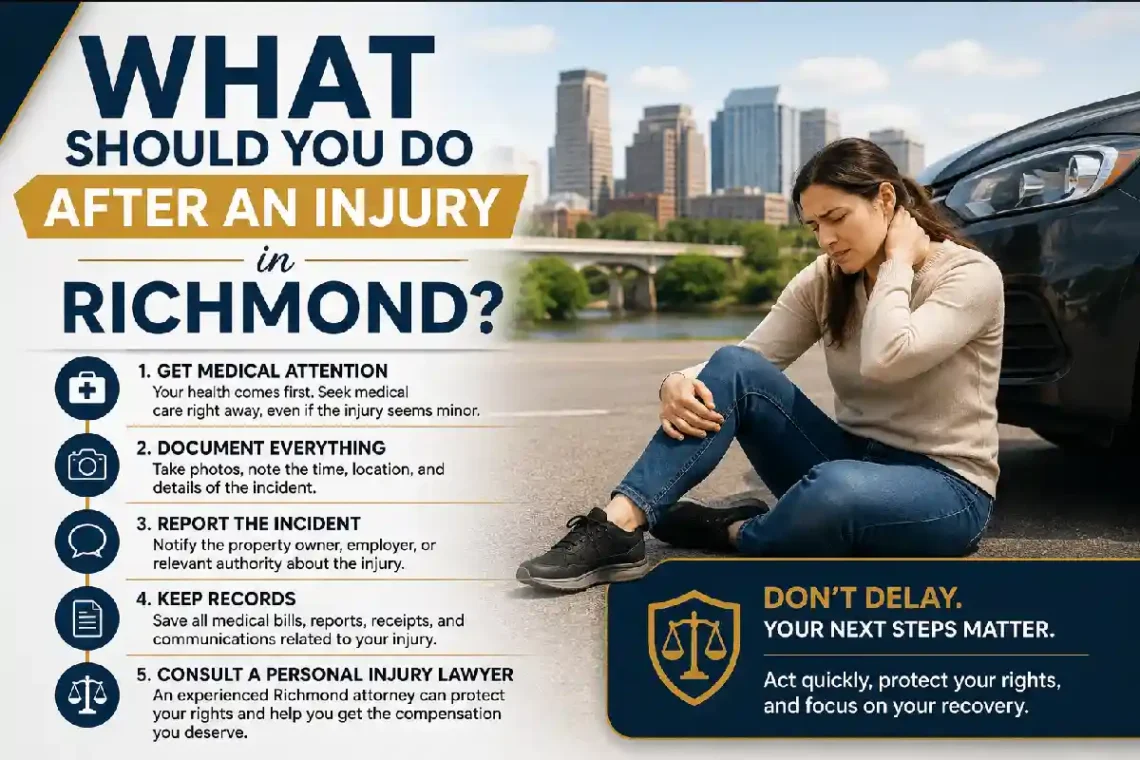
The first hour after an accident rarely goes as neatly as the advice online suggests. People are shaken. Nobody remembers which photos to take. A driver may be standing beside a damaged car, insisting they feel fine, while their neck is already beginning to tighten. Inside a store, an employee may clean up the spill before the injured customer has even found a place to sit.
That confusion is normal. What matters is what happens next.
An injury claim is built from ordinary things: a medical record, a few clear photographs, the name of a witness, a pay slip showing missed work. None of these steps is complicated on its own. The difficulty is remembering them while dealing with pain, bills, and an insurance adjuster who wants answers.
Start With the Injury, Not the Claim
It’s easy to underestimate an injury at the scene. Adrenaline has a way of hiding pain, and some symptoms don’t appear immediately. A person may walk away from a collision and feel considerably worse that evening.
Serious symptoms need emergency attention. Otherwise, it still makes sense to arrange a medical evaluation without an unnecessary delay. Be plain with the doctor. Explain where the pain is, when it began, and whether it has changed. This isn’t the time to exaggerate, but it isn’t the time to shrug off a headache or limited movement either.
Write Down What Happened
Memories change faster than most people expect. Small details—the color of a traffic light, the location of a warning sign, what a store employee said—can become fuzzy within days.
Report the accident to the appropriate person. For a vehicle crash, that may mean law enforcement. For a fall at a business or apartment complex, it usually means a manager, owner, or property representative. Ask whether an incident report will be prepared and how to request a copy.
Keep your description factual. If you don’t know how long a puddle was on the floor, say you don’t know. A guess made during a stressful moment can later be repeated as though it were certain.
As soon as you have a quiet moment, make your own notes. What did you see and hear? Who came over afterward? Write in your normal words. A same-day note is far more useful than a polished version reconstructed six months later.
Take the Photos People Usually Forget
Most people remember to photograph a crushed bumper. They often forget the rest of the scene.
Take a few wide photographs first. In a traffic accident, include the road, lane markings, nearby signs, and the final positions of the vehicles. After a fall, photograph the whole walkway, aisle, staircase, or entrance. The wider view shows where the hazard was and what someone approaching it could reasonably see.
Then capture the close details: liquid, broken flooring, debris, vehicle damage, torn clothing, or visible injuries. Witness information matters too, so ask for a name and reliable contact details.
Keep One Folder for the Messy Paperwork
Accident expenses arrive at different times. Use one physical or digital folder and save:
- Medical bills and treatment instructions
- Prescription and medical-equipment receipts
- Vehicle estimates, towing charges, and rental costs
- Insurance letters and important emails
- Pay records showing missed hours or lost income
- Receipts for reasonable accident-related expenses
Keep brief notes about recovery too. Perhaps sleep was difficult, driving became painful, or help was needed with childcare. These ordinary details are easy to forget later.
Slow Down When an Insurer Calls
Basic information is one thing. Guessing about speed, distance, fault, or the extent of an injury is another. If you don’t know an answer, say that. There is no benefit in filling silence with a theory.
Be careful with a request for a recorded statement or a broad authorization to obtain medical history. It’s reasonable to ask what is required, what the document covers, and how the information will be used before agreeing.
An early settlement deserves a pause as well. It may arrive before the full course of treatment is known. Once a release is signed, the claim is generally over; a person usually can’t return later because an injury lasted longer than expected.
Virginia Law Can Be Unforgiving
Virginia generally allows two years to file a lawsuit for personal injuries, measured from when the claim accrues. Certain situations can change the calculation, and some claims carry separate notice rules. That is why “I still have plenty of time” is a risky assumption.
The Commonwealth also uses contributory negligence in many negligence cases. If the injured person is found to have contributed to the accident, recovery may be barred. Details that initially appear minor—distraction, speed, footwear, or the visibility of a warning—can become central to the dispute.
When a Legal Conversation Is Worth Having
A small claim with clear facts may be resolved directly. Legal advice becomes more useful when the injury is significant, responsibility is disputed, more than one party may be involved, or the insurance coverage is unclear. The same is true when work has been affected or an insurer is pressing for a quick decision.
A Richmond personal injury lawyer can review the available records, explain the relevant deadlines, look for applicable insurance coverage, and handle communication with the companies involved. The point of an initial conversation is to understand the options, not to receive a guaranteed outcome.
Ask practical questions before hiring anyone. Who will manage the matter day to day? How are costs and fees handled? What experience does the firm have with this type of accident? When should the client expect updates? Clear communication is a better sign than a grand promise.
A Final, Practical Thought
After an accident, the paperwork can wait for a few hours. Medical care can’t. Once the immediate situation is under control, however, start saving the pieces: the report, photographs, witness details, bills, and notes.
You don’t need to turn recovery into a full-time investigation. You simply need an honest record of what happened and what it cost. That record gives you—and anyone advising you—something more reliable than memory when important decisions have to be made.