
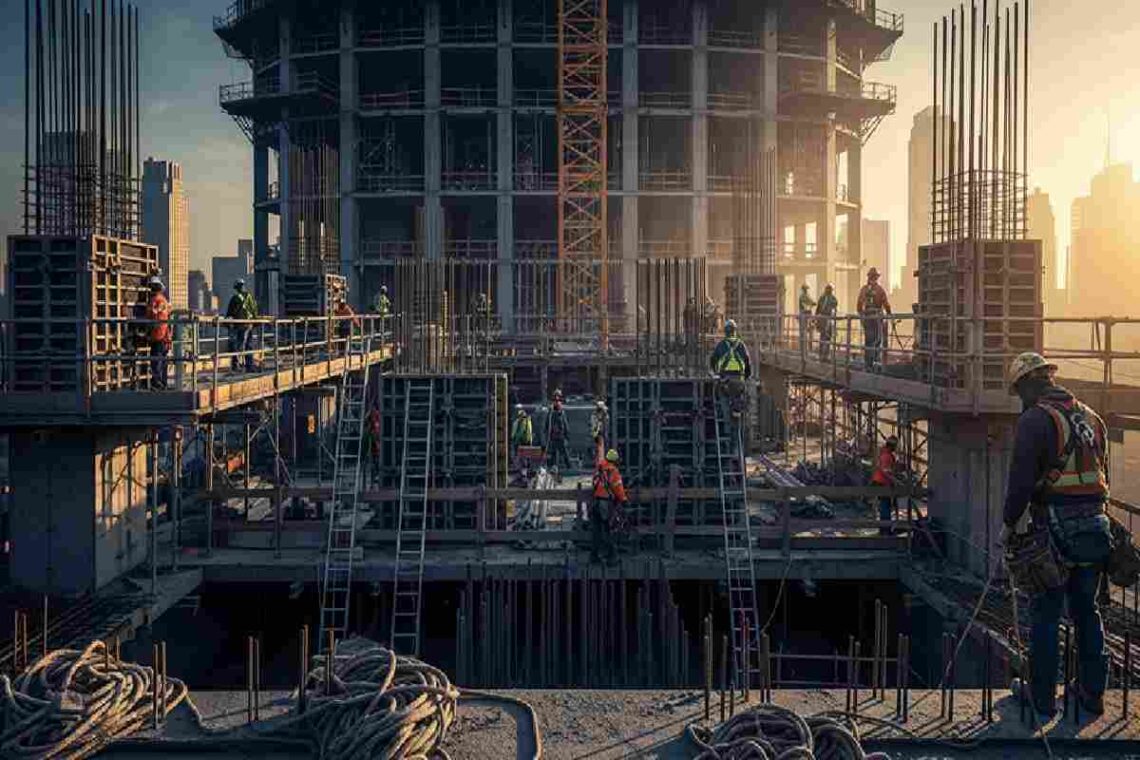
New York’s Scaffold Law in 2026. A law enacted in 1885 continues to be one of the most powerful and significant protections for New York’s construction workers. This unique provision, known as the Scaffold Law, places a high level of responsibility on property owners and contractors to ensure worksite safety for elevation-related tasks. However, this long-standing protection has become the center of a modern-day firestorm, making it more critical than ever for workers to understand their rights.
A recent report from the Building Trades Employers’ Association has ignited intense debate, claiming the law drives insurance costs in New York to be 200% to 500% higher than in other states. With such high stakes, it is essential for every construction worker to know what this law is, how it shields them, and what to do if an accident occurs. This guide will clarify the facts, explain your rights, and outline the critical steps to take after a gravity-related injury.
The Bedrock of Worker Protection: Deconstructing Labor Law § 240
New York Labor Law § 240 is designed to protect workers from the significant dangers associated with gravity on construction sites. It mandates that owners and contractors furnish or erect specific safety devices—such as scaffolding, hoists, ladders, and ropes—to provide proper protection to workers. When they fail to do so and an injury results, the law provides a powerful path to hold them accountable.
The Unique Principle of Absolute Liability
The most distinct feature of Labor Law § 240 is its absolute liability standard. This means that if a contractor or property owner fails to provide adequate safety equipment for a gravity-related risk and a worker is injured because of that failure, they are 100% responsible for the resulting damages. This legal standard is a major departure from most other personal injury cases in the state.
Typically, New York follows a pure comparative negligence law, where an injured person’s compensation is reduced by their own percentage of fault. Under the Scaffold Law, however, a worker’s potential contributory negligence is generally not a defense that the owner or contractor can use. This is a crucial distinction that makes these cases uniquely protective of workers who are put in dangerous situations.
Who is Protected and Who is Liable?
The law extends its protection to a broad class of individuals, including construction workers, painters, repair personnel, and others performing qualified work on a building or structure. The responsibility, or liability, falls squarely on all contractors, property owners, and their agents involved in the project. The primary exception to this rule applies to the owners of one- and two-family dwellings who do not direct or control the work being performed on their property.
More Than Just Scaffolds: Covered Gravity-Related Accidents
Despite its common name, the Scaffold Law’s protections cover a wide range of elevation-related risks, not just incidents involving scaffolds. The law applies whenever there is a significant gravity-related risk, and the provided safety equipment is inadequate or fails. This includes situations where a worker falls from a height or is struck by an object falling from above.
Concrete examples of incidents covered under Labor Law § 240 include a worker falling from an unsecured ladder that slips or shifts, scaffolding collapsing because it was improperly assembled, a worker on the ground being hit by tools or materials dropped from an upper level, or an employee falling through an unguarded opening in a roof or floor.
The Battle Over § 240: What the Debate Means for Your Claim
The intense debate over the Scaffold Law pits powerful economic interests against worker safety advocates. Understanding both sides of this argument is essential, as this high-stakes environment directly impacts how injury claims are handled.
Understanding Both Sides of the Argument
Opponents of the law point to its severe economic impact. Recent reports highlight that insurance premiums in New York now consume 8-10% of total development budgets, a stark contrast to the 2-4% seen in neighboring states. The potential savings from reforming the law are staggering, with estimates suggesting New York City could save over $1.1 billion on projects like the Penn Station redevelopment and the Second Avenue subway extension combined.
In response, worker safety advocates argue that the law isn’t the problem—unsafe construction is. They maintain that the law correctly penalizes contractors and owners who cut corners on essential safety measures. From their perspective, switching to a comparative negligence standard would unfairly shift blame onto injured workers and remove the powerful incentive for employers to maintain the safest possible worksites.
How This High-Stakes Environment Impacts Your Case
Because of the absolute liability standard and the massive financial sums involved, owners, contractors, and their insurance carriers defend these claims with extreme vigor. They will invest heavily in investigators and legal teams to find any possible way to challenge the claim or deny responsibility. This intense, well-funded opposition makes it nearly impossible for an injured worker to navigate a Scaffold Law claim alone.
The complexity of proving a violation, combined with the aggressive tactics of the defense, underscores why securing expert legal guidance from the very beginning is not just an option, but a necessity. An attorney experienced in these specific cases can level the playing field and ensure your rights are protected against powerful corporate and insurance interests.
| Feature | Scaffold Law (Labor Law § 240) | Standard Negligence Claim |
| Basis of Liability | Absolute Liability: Failure to provide proper protection for gravity-related risks. | Comparative Negligence: Failure to exercise reasonable care, causing injury. |
| Worker’s Fault | Generally not considered as a defense to reduce the owner/contractor’s liability. | Directly reduces the worker’s financial recovery based on their percentage of fault. |
| Burden of Proof | Worker must prove the law was violated and this violation was a cause of the injury. | Worker must prove the defendant was negligent and that their negligence caused the injury. |
| Focus of the Case | Was the proper safety equipment provided for the task? | Who was at fault and by what percentage? |
Protecting Your Health and Your Rights: Immediate Steps to Take
If you are injured in a gravity-related accident on a construction site, the actions you take immediately afterward are critical for both your physical recovery and your ability to secure the compensation you deserve. Following a clear plan can protect you from mistakes that could jeopardize your health and your legal claim.
Actions at the Scene of the Accident
Your absolute first priority is your health. Seek immediate medical attention, even if you believe your injuries are minor, as some serious conditions may not present symptoms right away. As soon as you are able, report the accident to your supervisor or foreman and insist that an official incident report is created. If possible, use your phone to document everything by taking photos and videos of the accident scene, the faulty equipment, and your visible injuries. Be sure to collect the names and phone numbers of any coworkers who witnessed what happened.
Navigating the New York Legal System
Navigating the aftermath of a construction accident can be incredibly complex. The legal process is filled with strict deadlines and procedural rules, particularly when dealing with Albany New York personal injury laws. Expert legal counsel is critical here
Firms with deep expertise in construction law, like Hacker Murphy, understand the unique challenges of Scaffold Law cases. Their attorneys are adept at investigating worksite failures, preserving critical evidence, and holding negligent parties accountable under Labor Law § 240. They manage the legal burdens so you can focus on recovery.
For workers injured in the Capital Region, consulting with an experienced personal injury lawyer is the most critical step toward securing the compensation you are entitled to for medical bills, lost income, and the enduring effects of the trauma.
- File for Workers’ Compensation Benefits: This is your initial source of benefits, covering medical treatment and a portion of lost wages. Filing for workers’ comp is a separate process from a personal injury lawsuit and does not prevent you from pursuing a Scaffold Law claim against a third party like a property owner or general contractor.
- Adhere to Critical Deadlines: In New York, you generally have three years from the date of the injury to file a personal injury lawsuit. However, the timeline is much shorter if your claim is against a public entity like a city or state authority. In those cases, you must file a Notice of Claim within just 90 days of the incident, and missing this deadline can permanently bar you from recovering damages.
- Do Not Give Recorded Statements: Insurance adjusters representing the property owner or contractor will likely contact you very quickly after an accident. Do not provide a recorded statement or sign any documents without first speaking to your attorney, as these can be used to undermine your claim later.
- Document Everything: Maintain a detailed file of every document and photo connected to the incident. This includes all medical bills and records, photos of your injuries over time, pay stubs to document lost income, and any correspondence you receive from your employer or insurance companies.
The Enduring Power of the Scaffold Law
For over a century, the Scaffold Law has remained one of the most vital protections for New York construction workers, placing the responsibility for safety squarely on the shoulders of owners and contractors. While the fierce economic debate surrounding the law is certain to continue, an injured worker’s immediate focus must be on their health and the protection of their legal rights. Understanding this powerful, long-standing law is the first step toward holding negligent parties accountable and securing the justice and compensation you deserve after a preventable worksite accident.