
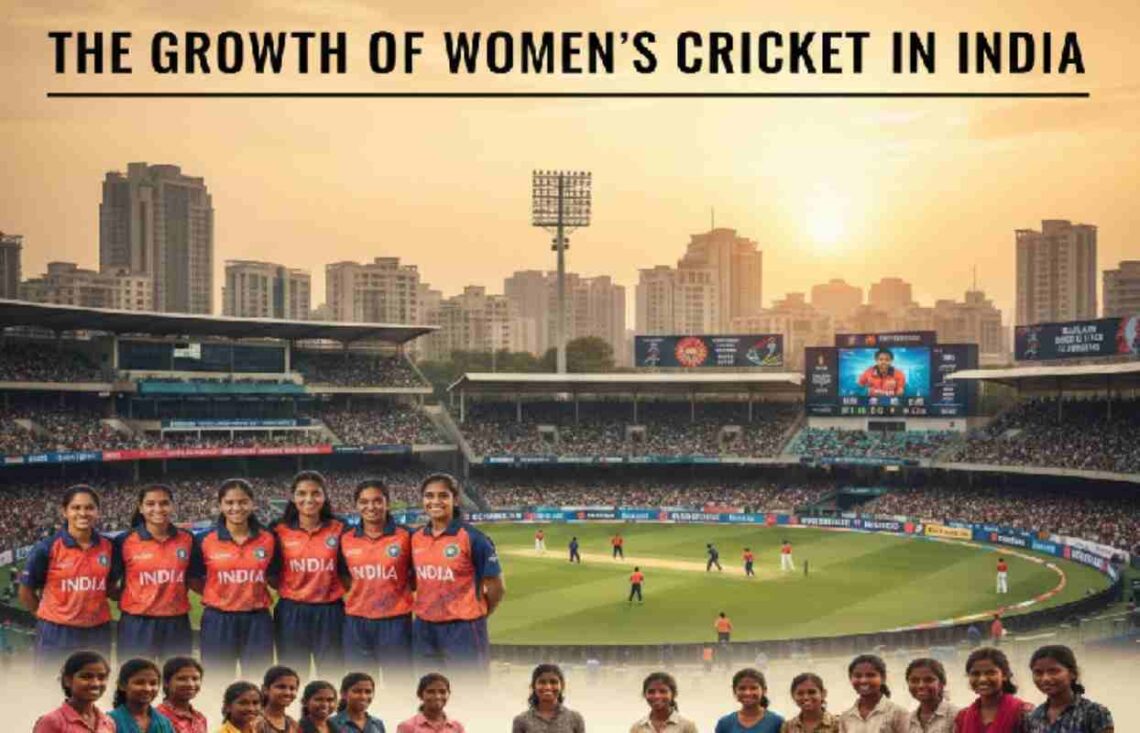
The Growth of Women’s Cricket in India
Women’s cricket in India has moved from the margins to prime-time conversation, and the change is visible in results, resources, and recognition. A sport that once relied on personal sacrifices and last-minute sponsorships now produces global moments, professional support staff, and a clearer pathway for young players who are just starting to understand how the women’s game works.
The Growth of Women’s Cricket in India – Quick Answer
The growth of women’s cricket in India accelerated after women’s cricket came under the Board of Control for Cricket in India in 2006, gained mass attention through major World Cup runs in 2017 and 2020, and strengthened further when equal match fees were announced in 2023. Together, these shifts improved funding, scheduling, coaching support, and career viability, helping more players progress from local trials to the national team, while rising digital engagement — reflected even in trending searches like 1xbet download during major tournaments — highlighted the sport’s expanding commercial appeal and mainstream visibility.
How Indian Women’s Cricket Moved From Overlooked to Unavoidable
The modern story is easier to follow if you start with the long struggle. The Women’s Cricket Association of India (WCAI) was established in Lucknow in 1973, and the national side played its first ODI during the 1978 World Cup—the same year WCAI was recognized by the International Women’s Cricket Council. These were important steps, but they did not automatically create stable careers or a strong domestic pipeline.
For decades, men’s cricket dominated attention, budgets, and broadcast space in India. Women’s cricket existed, but often without the everyday support that new fans might assume is standard.
Even when India reached the final of the Women’s Cricket World Cup in 2005 in South Africa, the ecosystem behind the team still lacked many basics.
What “Infrastructure” Means in Cricket (Beginner-Friendly)
In cricket, infrastructure is not only stadiums. It includes access to nets and grounds, qualified coaches, travel support, equipment, medical care, and a domestic calendar that gives players enough matches to develop. When these pieces are missing, talent can still emerge—but it is harder to sustain, especially when families must carry most of the cost.
The Pre-2006 Reality: Passion First, Professionalism Later
One way to understand the earlier era is through the experiences of players who lived it. Former cricketer and BCCI match referee Kathakali Banerjee described the WCAI period as financially strained, with limited capacity to support players. She began playing for West Bengal in seventh grade in 1997 and later represented the Board President’s XI, a domestic first-class side that plays practice tour matches against visiting international teams. In 2010, she represented India Blue in the Challenger Trophy, a limited-overs tournament designed to showcase emerging domestic talent.
Her recollections highlight why growth took time: there were no proper facilities, no real infrastructure, and no perks, financial support, or payments. Parents often funded the dream. She also recalled situations where 15 players had to contribute to their own tickets, travelling in unreserved train compartments, sleeping on the floor, and staying in dormitories and classrooms.
That earlier generation stayed in the game largely for the pride of representing their state and the love of cricket.
2006: The Turning Point That Reshaped the Pathway
The most important structural change arrived in 2006, when women’s cricket came under the Board of Control for Cricket in India. This mattered because a national governing body can fund long-term programs, standardise domestic competitions, and hire specialist staff—things that are difficult for a cash-strapped association to do consistently. From that point, the women’s game could begin to look like a professional sport rather than a passion project.
For newcomers, a simple takeaway is this: before 2006, many players had to find their own way; after 2006, the system started building a clearer route from local cricket to the national team.
Why Equal Match Fees Became a Headline in 2023
In 2023, the BCCI announced that contracted female players would be paid the same amount as men per match. India joined Australia, New Zealand, and England as the fourth country with an equal pay policy.
For a beginner, the key point is not only fairness; it is retention. When match fees and schedules improve, more athletes can stay in the sport long enough to reach their peak.
World Cup Moments That Pulled the Audience In
Structural support needs a spark, and Indian women’s cricket got it on the world stage. In 2017, India reached the final of the ICC Women’s Cricket World Cup in England. That run helped change how many fans viewed women’s matches: as major events, not side content.
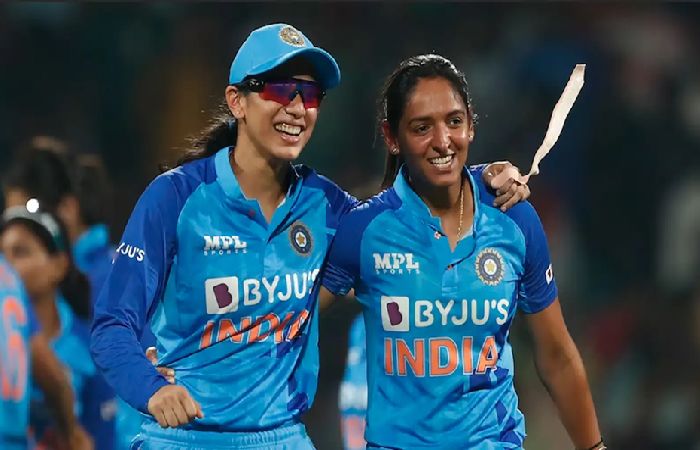
Harmanpreet Kaur, captain across ODI, T20I, and Test formats, became a central figure in that shift. Her 171 not out in the 2017 ODI World Cup semi-final against Australia remains one of the defining innings in Indian women’s cricket because it combined pressure, scale, and visibility in a single performance.
In 2020, India reached the final of the ICC Women’s T20 World Cup, reinforcing that 2017 was not a one-off. For beginners, it helps to know the formats: ODIs are 50 overs per side, while T20Is are 20 overs per side, demanding faster scoring and sharper tactics. Reaching finals in both formats signals depth and adaptability.
The Unsung Support: Administrators, Sponsors, and Practical Help
Growth is not only about what happens between bat and ball. In 2003, Mandira Bedi walked into the dressing room at the Cricket Club of India in Mumbai and asked how she could help women’s cricket. Shubhangi Kulkarni, then WCAI secretary, pointed to the everyday problems: lack of funds, minimal visibility, and the absence of spectators. The most urgent issue was immediate—there was no money to host the West Indies team scheduled to tour India soon after.
Bedi redirected a brand deal into direct support: her contribution of ₹15 lakh helped fund a five-match ODI series that was played as the ASMI Cup. For new fans, this is a useful reminder of how fragile the women’s calendar once was—international cricket sometimes depended on short-term rescue funding.
Another example came in 2000–01, when Arvind Prabhoo paid ₹6 lakh out of pocket to ensure a three-match ODI series between India and New Zealand could take place. In 2005, he also helped the team prepare for the World Cup in South Africa by funding an early arrival. He recalled seeing Jhulan Goswami bowling at 120 to 130 kmph and Mithali Raj striking boundaries with ease—proof that skill was never the missing ingredient.
Grassroots Reality: How a Player Finds the Game in Small-Town India
Bharti Fulmali’s early journey shows what the pathway could look like for many families. She started playing around 2004, at age 10, in the gullies and byways of Amravati in Maharashtra, often with boys in the neighbourhood. She played in school and used practice balls in local tournaments, until teachers encouraged her father to seek proper training.
Access was the barrier. Her father approached clubs linked to the state association but was turned away because girls were not allowed to practise with boys. Eventually, she found a private summer camp that accepted both boys and girls. She trained briefly, faced financial strain at home, and saw facilities close down before getting a chance at district-level trials in 2006. From borrowed shoes and pads at selection sessions, she moved on to represent Vidarbha women’s under-19 by 2008.
Her story captures the transition period—where talent was visible, but access was uneven.
Professional Support and the Small Edges That Win Big Matches
Modern women’s cricket is increasingly decided by preparation rather than raw ability. India’s women’s team has hired more professional coaches and staff, including its first-ever sports psychologist, brought in at the request of Harmanpreet Kaur. A sports psychologist helps players handle pressure, recover from mistakes quickly, and maintain routines—skills that become decisive in finals and tight chases.
Legends such as Shantha Rangaswamy, Diana Edulji, Jhulan Goswami, Mithali Raj, and Anjum Chopra built the credibility that allowed the next generation to be taken seriously.
What Fans in India Are Seeing Now
India’s first women’s World Cup win, achieved by beating South Africa in the final, marked a watershed moment. The final streamed on JioHotstar and drew 185 million viewers, matching the figure for the 2024 ICC men’s T20 World Cup final.
That scale matters because it changes the market. When audiences arrive in those numbers, sponsors, broadcasters, and organisers treat women’s cricket as a major property rather than a niche.
Many fans now follow matches, highlights, and analysis on mobile platforms, blending live viewing with stats and interactive features.
A Beginner’s Checklist to Follow Women’s Cricket Confidently
- Start with formats: ODI (50 overs) and T20I (20 overs) create different pacing and strategies.
- Track key milestones: 2005 World Cup final, 2017 ODI World Cup final, 2020 T20 World Cup final, and the later World Cup win over South Africa.
- Learn a few leaders: Harmanpreet Kaur, plus legacy icons like Mithali Raj and Jhulan Goswami.
- Notice the ecosystem: domestic match volume, coaching staff, and support roles like sports psychology.
A Simple Timeline of Key Milestones
- 1973: WCAI established in Lucknow.
- 1978: India women played their first ODI during the World Cup; WCAI recognized by the IWCC.
- 2005: India reached the World Cup final in South Africa.
- 2006: Women’s cricket came under the BCCI.
- 2017: India reached the ODI World Cup final; Harmanpreet Kaur scored 171* vs Australia in the semi-final.
- 2020: India reached the T20 World Cup final in Australia.
- 2023: Equal match fees announced; more domestic matches added.
What to Watch Next as a Newcomer
The next phase is about making the pathway routine. A 10-year-old in a small town should not need borrowed pads at trials or a family loan for basic exposure to a leather ball. The system’s job is to make access predictable through regular domestic fixtures, visible scouting, and coaching that reaches beyond major cities.
For fans, the most useful signal will be consistency—how often India produces match-winners across formats, how deep the domestic pool becomes, and how professional support shows up in tight games. Women’s cricket in India has already crossed the hardest threshold: it can no longer be overlooked.